Your pet and cannabis: What NJ and Staten Island data reveals
If outside the area, please call your nearest emergency vet.

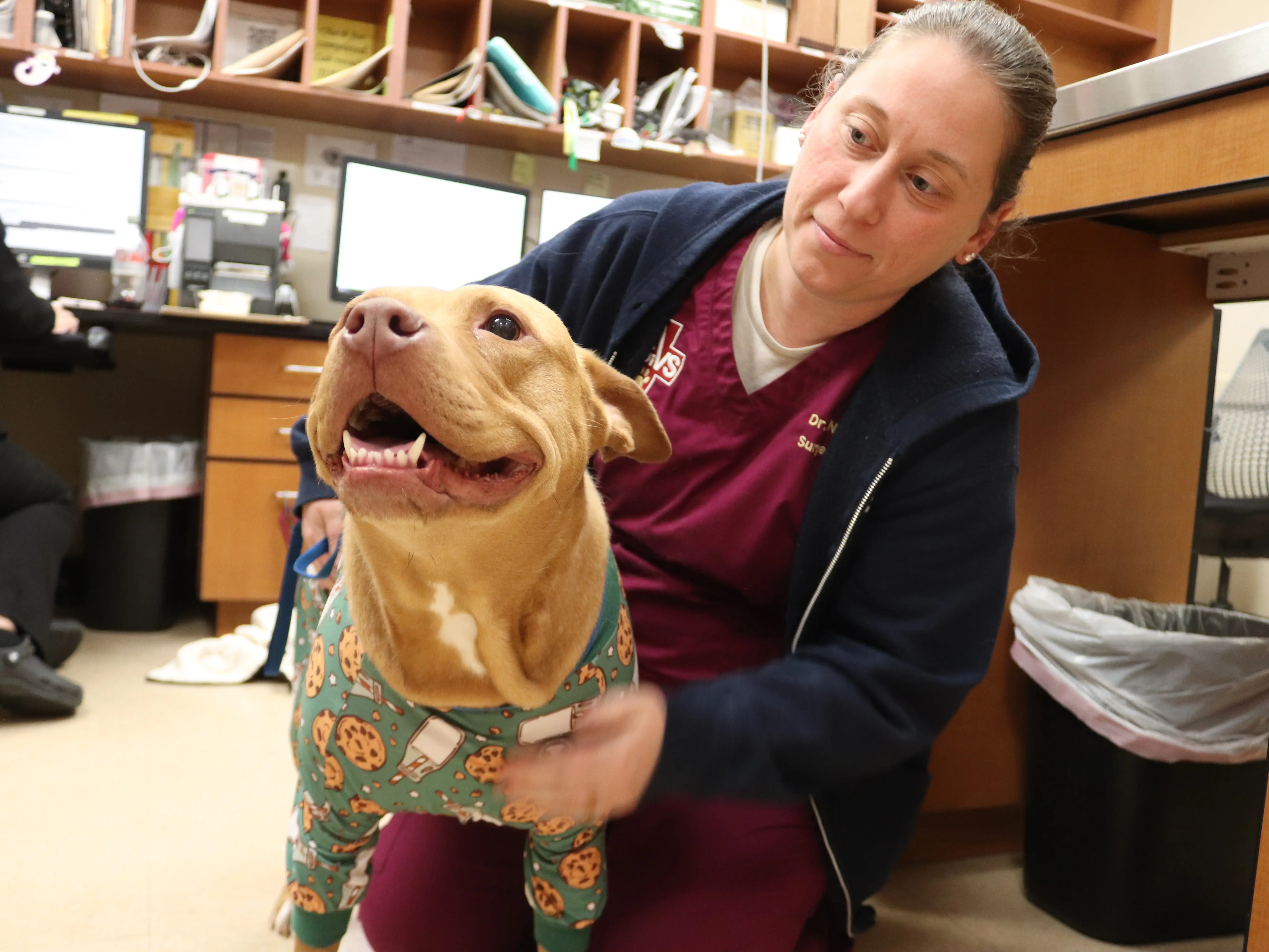
Cannabis is recreationally legal in New Jersey and New York, and it's increasingly present in homes across the Garden State and the nearby New York metro area. But for dogs and cats, what's routine for their owners can become a medical emergency in minutes. This report by the GSVS Family of Hospitals draws on regional search data and a pet owner survey to identify where exposure is occurring and how knowledge gaps leave too many pets at risk.
Key takeaways
- Salem County leads with 779 cannabis-pet-related searches per 100K residents, followed by Cape May (639) and Sussex (488).
- 1 in 20 NJ/NY metro pet owners (5%) report their pet has ingested cannabis.
- Only 25% of NJ/NY incident owners turned to AI for guidance, well below the national rate (47%).
- 1 in 3 NJ/NY pet owners whose pet ingested cannabis never sought veterinary care.
- 42% of NJ/NY incident owners were too embarrassed to tell the vet the truth.
- 52% of NJ/NY metro pet owners are unable to identify any symptoms of cannabis toxicity in pets.
- 95% of NJ/NY metro pet owners say cannabis packaging fails to warn about pet toxicity.
- 59% of NJ/NY metro residents believe cannabis legalization has increased pet exposure risk.
Regional search patterns for cannabis and pet info
Search data offers a window into where cannabis and pet safety are on people's minds, whether out of curiosity, concern, or an urgent need for answers.
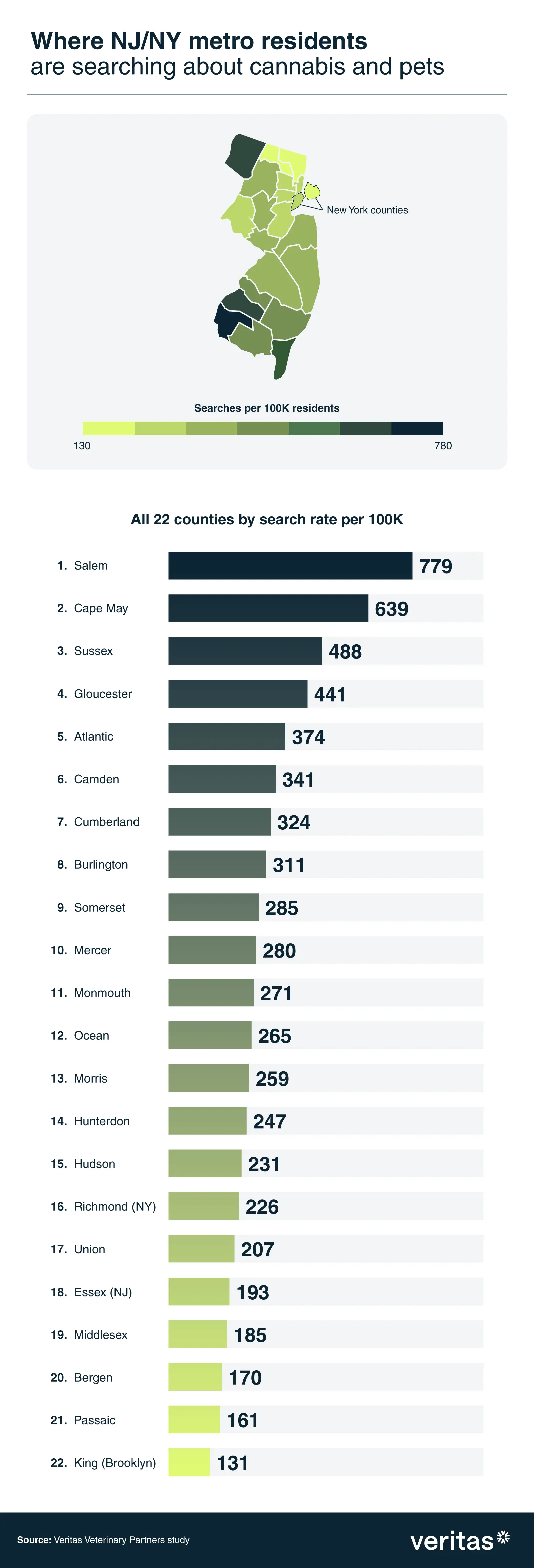
Salem County recorded the highest rate of cannabis-related pet searches at 779 per 100,000 residents, followed by Cape May (639) and Sussex (488). These figures significantly exceed those seen in more densely populated areas, indicating higher per-capita search intensity in smaller counties.
Richmond County (representing Staten Island) reported 226 searches per 100,000 residents, placing it 16th among the counties analyzed. And King County (Brooklyn, NY) came in last with the fewest cannabis-pet searches per capita (131).
Only two of the 22 counties analyzed experienced year-over-year increases in search volume: Hudson County, with a modest 0.6%, and Salem County, which rose 26.8%. The remaining 20 counties saw declines, ranging from a 3.7% decrease in Ocean County to a 41.1% reduction in Hunterdon County.
Cannabis exposure at home and beyond
Reported cannabis exposure in the region runs lower than national figures. But lower incidence doesn't mean lower risk, and for many pets, the danger starts at home.
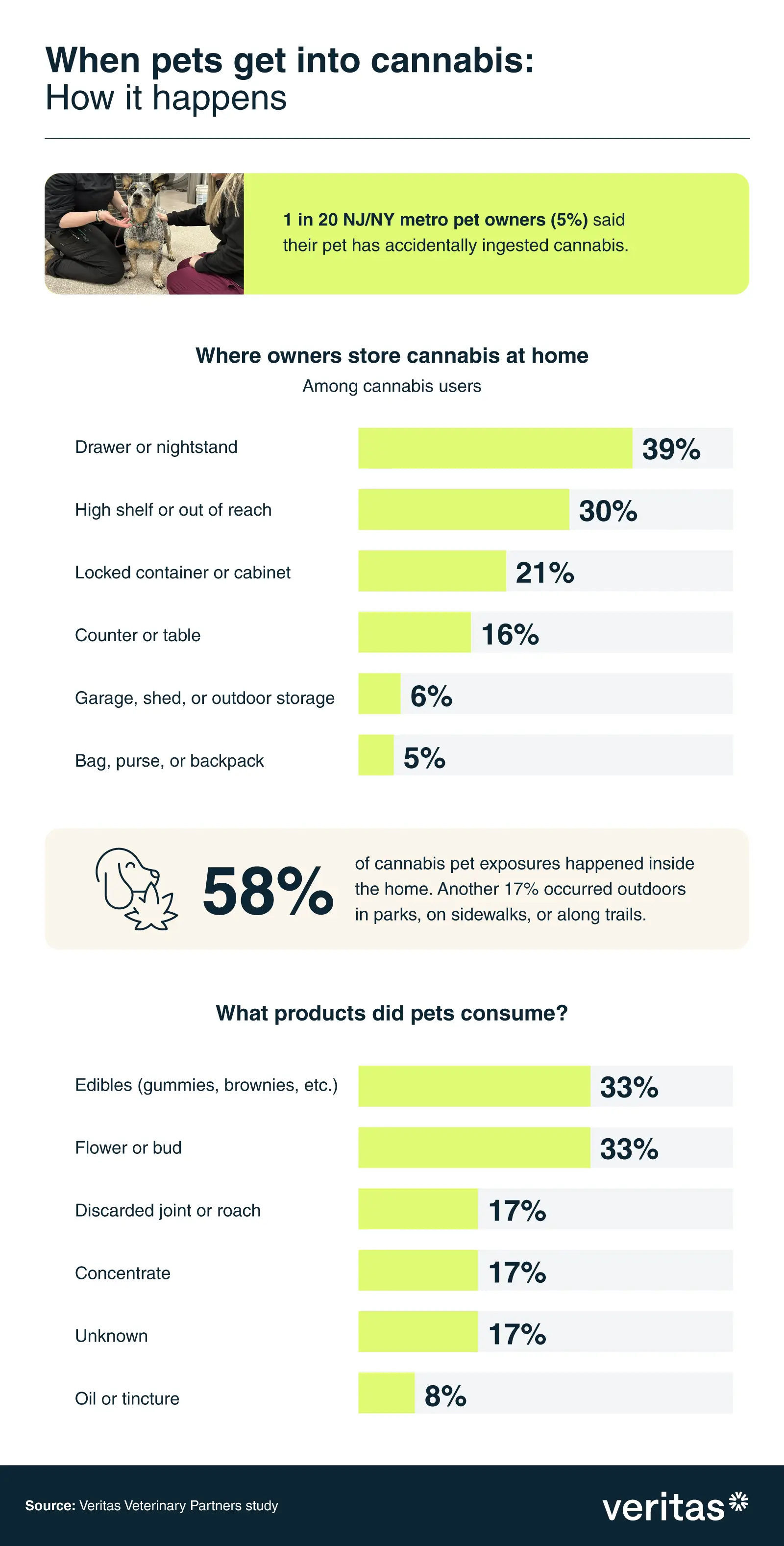
Five percent of NJ/NY metro pet owners reported that their pet has ingested cannabis, with an additional 3% indicating uncertainty. While this rate is lower than the national figure (10% exposed/unsure), it still represents a measurable and ongoing clinical concern.
Cannabis storage practices varied, with pet owners most often keeping it in a drawer or on a nightstand (39%). Thirty percent kept products out of reach, and 21% reported using locked containers.
Exposure sources were evenly distributed, with edibles and flower or bud each accounting for 33% of incidents. Discarded joints, roaches, and concentrates each contributed 17% of exposures. Most incidents occurred at home (58%), while 17% occurred outdoors.

A quarter of pet owners reported bringing their pet directly to an emergency veterinarian, while 17% called their regular vet. Only 25% of owners reported using generative AI tools for guidance, much lower than the nationwide rate of 47%.
One-third of pet owners did not seek veterinary care, aligning with broader national trends. Among those who sought care, 42% reported hesitation to disclose the true cause of their pet's symptoms, which can complicate clinical assessment and treatment. Overall, 42% of pets required emergency treatment, costing an average of $129.
This experience had a profound impact on a portion of pet owners. Following the emergency experience, 25% of owners reported quitting cannabis entirely.
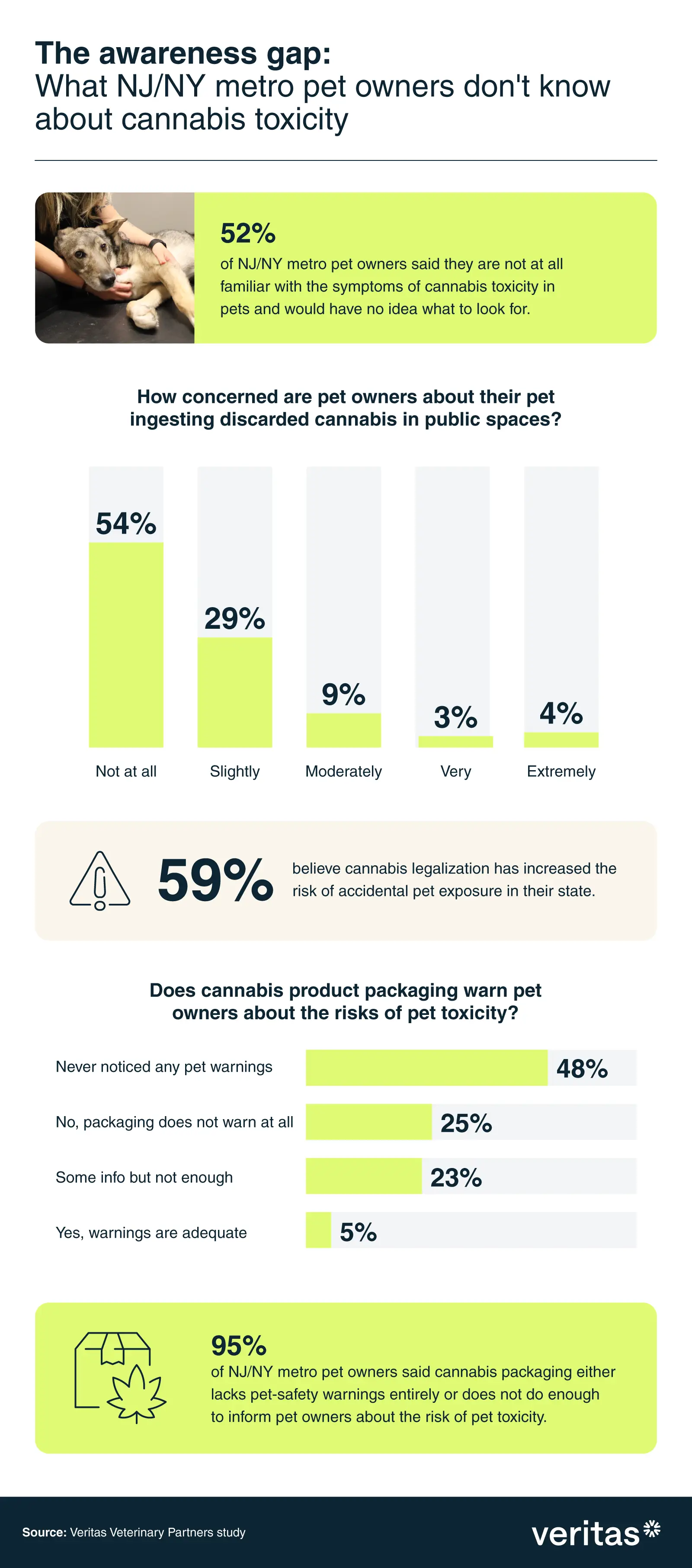
More than half of pet owners (59%) said they believe cannabis legalization has increased pet exposure risk. Despite this, 52% reported no familiarity with cannabis toxicity symptoms. Only 9% described themselves as very familiar, indicating limited preparedness to recognize early clinical signs.
Concern about public exposure is relatively low: 54% report no concern, and 29% report slight concern. At the same time, 95% of pet owners indicated that cannabis packaging does not adequately warn about pet toxicity risks.
Awareness is the first line of defense
For pet owners across New Jersey and the NY metro area, cannabis exposure is a risk that can escalate quickly and without warning. The data shows a community that is largely unprepared—more than half of owners cannot identify a single symptom of toxicity, and a third never sought veterinary care when their pet was exposed.
Knowing what to look for, storing products out of reach, and acting quickly when something seems wrong are not small considerations. In an emergency, they are the difference between a minor scare and an expensive, stressful trip to the emergency vet.
Methodology
For this study, we analyzed cannabis-pet-related search volume across the U.S. to identify which counties searched most for these queries. Some of these queries included: "dog ate weed," "is thc toxic to dogs," and "is CBD safe for dogs," among many others. We analyzed search volume from April 2025 through March 2026, and the year before (April 2024 to March 2025) as a comparison.
We also conducted a survey of 247 NJ and NY pet owners (50 from the NY/Staten Island/NJ metro-area) to ask about their experiences with cannabis-related pet incidents and how they responded.
About GSVS Family of Hospitals
The GSVS Family of Hospitals is a family of emergency and specialty veterinary hospitals, with locations in Eatontown, Woodbridge, Toms River, and Staten Island. Our teams of board-certified specialists and emergency clinicians provide advanced, compassionate care across a full range of disciplines, including cardiology, neurology, oncology, surgery, critical care, and more.
24/7 emergency services are available 365 days a year, because when your pet's health depends on it, waiting isn't an option. Learn more at gsvs.org.
Fair use statement
This content may be shared or referenced for noncommercial purposes. We ask that any use include proper attribution to the GSVS Family of Hospitals and a link back to the original source.
The information contained in the article is for informational purposes only and is not intended to take the place of the advice of a veterinarian.